
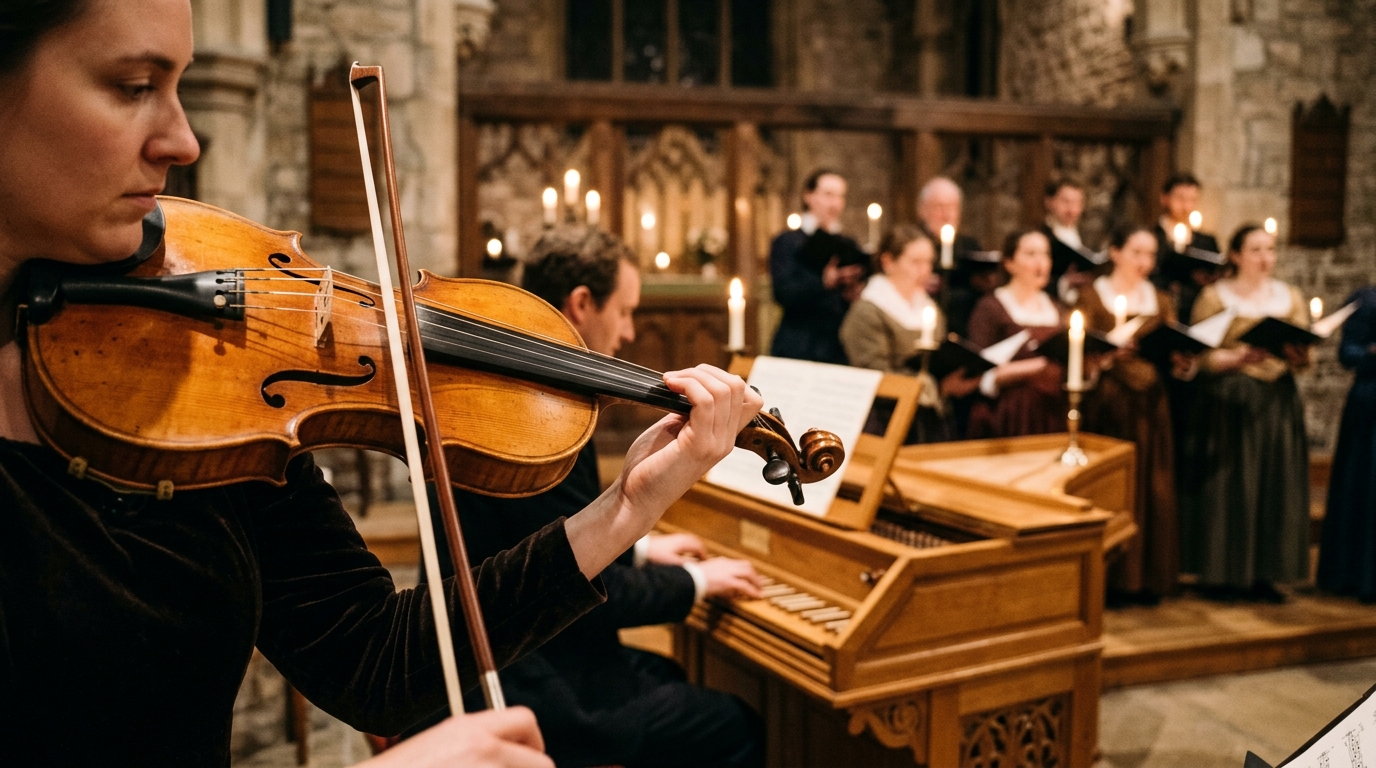
When we picture Christmas music today, our minds often jump to massive symphonic orchestras, booming brass sections, or the lush, mid-century radio standards we hear in department stores. But step back three to four centuries, and the sound of holiday celebration was something entirely different: intimate, vibrant, deeply rhythmic, and surprisingly grounded in everyday life.
This fall, our program—An “Early” Christmas—invites you to experience the season through the ears of 17th-century Europe. Centered around French composer Marc-Antoine Charpentier’s 1690 masterpiece, Messe de minuit pour Noël (Midnight Mass for Christmas), this concert brings together the joyful, foot-tapping spirit of Renaissance folk traditions and the elegance of early Baroque sacred music.
Folk Songs in the Cathedral
What makes Charpentier’s Mass so extraordinary—and so accessible—is its playful secret. In late-17th-century France, everyday people sang popular folk carols called noëls in the streets throughout December. Rather than writing a dense, distant liturgical piece, Charpentier took eleven of these well-known folk melodies and built his entire Midnight Mass on top of them.
When the congregation listened to the choir sing the sacred Latin Kyrie or Gloria, they weren’t hearing unfamiliar, complex church music; they were hearing the very tunes they had been humming on their walk to church. It was an ingenious blend of sacred reverence and earthy, community celebration. Surrounded by festive works from Buxtehude, Handel, Praetorius, Sweelinck, and Victoria, the program feels less like a formal recital and more like a musical feast.
What to Listen For During the Performance
- The Warmth of Period Instruments: Accompanied by a professional chamber ensemble playing period instruments—featuring gut strings and historical wind instruments—the sound world is warm, light, and transparent. Instead of overpowering the choir, these instruments blend seamlessly with the human voice.
- The Irresistible Urge to Dance: Long before Christmas music became stately and slow, it was driven by dance rhythms like the gigue and courante. Listen for the subtle, bouncing triple meters throughout Charpentier’s Mass that give the music a feeling of weightless momentum.
- Conversations Across the Stage: In the Renaissance pieces by Victoria and Sweelinck, listen for how individual vocal lines echo and answer one another. The melodies weave around each other like threads in a tapestry rather than moving in single, block-like chords.
Whether you are a lifelong lover of early music or attending your very first classical holiday concert, An “Early” Christmas offers a refreshing, joyful journey back to the authentic roots of the season.